Showing posts with label It's Gourmet?. Show all posts

Monday, July 27, 2009

10 Gourmet Foods That are Illegal in the US.

Some illegal foods are illegal for health reasons, others are for the survival of a species or against acts of animal cruelty. Some may be delicious and others may be downright nasty. Different cultures all have their own palette. The United States has banned these 10 foods whether you’d eat them or not. Take a look and see what you can’t eat and what might be worth the risk to you.
  1. Unpasteurized cheese – Unpasteurized cheese is not your typical Kraft block of cheese. This cheese is full flavor and is touted by enthusiasts as the best cheese to ever hit your taste buds. It carries a dangerous health risk: bacteria. The FDA warns against eating any unpasteurized dairy products, but cheese lovers from across the country are willing to take their chances.
  2. Beluga sturgeon caviar – The eggs of the beluga sturgeon fetch prices as high as a few thousand dollars for as little as three ounces, but you can’t buy it in the U.S. The Federal Fish and Wildlife Service added the beluga sturgeon to its endangered species list in 2004 and approved a nation-wide ban on the import of all Caspian Sea beluga sturgeon caviar in 2005. Caviar from the fish is often considered the best available, but the fish are dwindling in numbers from overfishing and poor habitat conditions.
  3. Foie gras – A French favorite, foie gras is made from the fattened liver of a duck or goose. Two states have imposed bans on foie gras – California and Chicago. California’s ban will not take effect until 2012. Chicago’s foie gras ban started in 2006, but was overturned in 2008. What’s all the fuss? Foie gras is traditionally obtained by force feeding the waterfowl and then harvesting it. Many people continue to eat and enjoy the duck delicacy, despite surrounding controversy.
  4. Chilean sea bass – While Chilean sea bass are not illegal to consume, the U.S. government closely regulates the illegal fishing and importing of the buttery-tasting fish. According to the Department of State, consumers and restaraunteurs should ask about where the fish comes from before eating or buying it to help prevent the illegal harvesting of the pricey import.
  5. Mangosteens – Until 2007, fresh mangosteens were illegal to import into the U.S. because of the potential for Asian fruit flies to endanger crops. Now people can enjoy the delicate fruit for a high price from specialty stores. The mangosteen had some famous fans including Queen Victoria who would offer rewards to anyone that could bring her a mangosteen.
  6. Sichuan peppercorns – These little Asian fruits are the mainstay of many traditional Chinese dishes. The peppercorns are no longer illegal in the U.S. provided that the peppercorns are heated to kill harmful, difficult to control bacteria, citrus canker, that can kill citrus crops. The FDA lifted the 37-year ban in 2005.
  7. Raw milk – Raw milk drinkers have existed for centuries and rave about the health benefits of drinking the unpasteurized cow’s milk. The FDA does not though. As a matter of fact, the FDA has attributed illnesses and even deaths to drinking unpasteurized milk.
  8. Sea turtles – Sea turtle soup is a European dish that has been around for several centuries. A mock turtle soup must now be cooked from the gelatinous area of a calf’s neck and head since catching a sea turtle, much less eating a sea turtle, can land you in serious trouble with the law for poaching. Sea turtle soup is famed for being delicious, but the endangered species tops the list as a higher priority than soup for the Federal Fish and Wildlife Service and for the millions of people that stopped eating it.
  9. Moonshine – A product of the abolishment of alcohol, moonshine is still around today intoxicating those brave enough to sip it. The home distillation of moonshine is illegal, but for those who sneak the drink, it’s a delight worth tangling with the law over.
  10. Horse – While many people would probably not eat a horse in the U.S., Texas passed legislation to ban the slaughter of horses for consumption in 2007 to prevent American horses from ending up as dinner in foreign countries that routinely eat the animal.

Now you know some of the illegal foods in the U.S. so don’t say we didn’t warn you!

Provided by http://www.physicaltherapyassistantschools.org

Saturday, November 01, 2008

Serbian Chef is Nuts for Balls!

With the credit crunch kicking in, shoppers will be relieved to hear a cost-effective alternative to steak is now available for creating classic meat dishes.

The Testicle Cookbook: Cooking With Balls has been hailed as the world's first testicle recipe collection and includes testicle pizza, battered testicles and barbecued testicles with giblets.

And if counting the pennies isn't enough of a reason to indulge in the delicacy, testicles are also renowned for their libido-boosting properties.

Rich in testosterone, they are believed to be a powerful aphrodisiac in countries such as Serbia and China.

The e-book, available for download from the Internet, comes with handy video guides showing the author, Ljubomir Erovic, peeling the skin off testicles and slicing them up into bite-size chunks.

Several different animals, including stallions, ostriches, bulls, pigs and turkeys, get the Erovic treatment.

Read More....

Wednesday, May 28, 2008

Really, It's Gourmet: 1000 Year Old Egg

This installment of “Really, It’s Gourmet” will acquaint you with a traditional Chinese delicacy that has been around since the Ming Dynasty about 500 years ago.

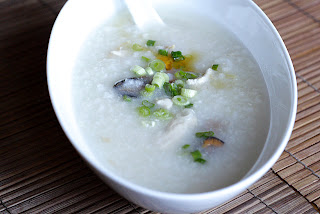
The Century Egg , also known as preserved egg, hundred-year egg, thousand-year egg, and thousand-year-old egg, is a Chinese culinary ingredient made by preserving duck, chicken or quail eggs in mixture of clay, ash, salt, lime, and rice straw for several weeks to several months, depending on the method of processing. After the process is completed, the yolk becomes a dark green, cream-like substance with a strong odor of sulfur and ammonia, while the white becomes a dark brown, transparent jelly with little flavor or taste. Doesn’t that sound yummy boys and girls? Sulfur and ammonia, I’m sorry, is that the description for food or the public restrooms on Fisherman’s Warf?

As putrid as this may sound to most people, even today this method of preserving eggs is widely practiced. Modern understanding of the chemistry behind the formation of century eggs has led to many simplifications in the recipe. For instance soaking the eggs in brine of salt and for 10 days followed by several weeks of aging while wrapped in plastic is said to achieve the same effect as the traditional method.

There are many ways to eat Century Eggs; on their own as a side dish. As an hors d'oeuvre, the Cantonese wrap chunks of this egg with slices of pickled ginger root. The most popular seems to be to cut them up into tiny cubes and cook them with rice porridge to create Century egg and Lean Pork congee. A popular street food in Hong Kong consists of whole century eggs coated in fish meal, breaded, and deep-fried. Here in the US a popular way to eat 1000 year old egg is to have it force fed to you because you lost a bet!

There are many strange and wonderful gourmet dishes prepared around the world, some we simply embrace and other we must say “Really, It’s Gourmet”!

Recipe: Century egg and Lean Pork Congee


Ingredients
2 century eggs
8oz lean pork
8 cups of plain rice porridge
1 tbsp sliced ginger
1 tbsp chopped spring onion
1 sprig of cilantro

Seasonings
pinch of pepper
1 1/3 tbsp salt
dash of
sesame oil

Directions

  1. Remove the shell of the century egg and cut into small cubes
  2. Marinate the lean pork with 1 tbsp of salt
  3. Cook 8 cups of plain rice porridge
  4. Add the century egg, lean pork, ginger and the seasonings
  5. Cook a further 5 minutes

Friday, October 12, 2007

Really, It's Gourmet - Huitlacoche?

When you think of Mexican cuisine, what image comes to mind? If you are like most people it's gonna be burritos, tacos, enchiladas and a myriad of other Americanized dishes that have been adjusted to please our pallets. Today however we are looking into a food that never really quite caught on around these part, until now?

American farmers call it "smut" and "devil's corn" and consider it a disease to be eradicated. The people of Mexico as well as the American Hopi Indians consider the fungus a delightful delicacy.

Considered a pest in most of the United States, smut feeds off the corn plant and decreases the yield. Usually smut-infected crops are destroyed. However, in Mexico corn smut is called huitlacoche, (sometimes spelled cuitlacoche) It is pronounced (kweet-lah-KOH-chay) an Aztec word reportedly meaning raven's excrement. Gee, I wonder why they would have called this ever so attractive food by that name. It is considered a treat, even being preserved and sold for a higher price than corn. So to recap; infected corn is more expensive than healthy corn.

For culinary use, the infected kernels are harvested while still immature — fully mature corn infection is dry and almost entirely spore-filled. The immature infected kernels, gathered two to three weeks after an ear of corn is infected, still retain moisture and, when cooked, have a flavor described as mushroom-like, sweet, savory, woody, and earthy. Or as I would describe it a delicate blend of smoker’s lung, sweet corn and sweat socks. The Aztec's fashioned the fungus into dishes of crepes, soups, and tamales.

This fungal infection has had difficulty entering into the American and European diets as most farmers see it as blight, despite attempts by government and high profile chefs. In the mid-1990s and due to demand created by high-end restaurants, Pennsylvania and Florida farms were allowed by the United States Department of Agriculture (USDA) to intentionally infect corn with huitlacoche.

In 1989 the James Beard Foundation held a high-profile huitlacoche dinner. This dinner was intended to get Americans to eat more of it by renaming it the Mexican truffle. The menu was created by Josefina Howard of Rosa Mexicano restaurant and included huitlacoche appetizers, soup, crepes, tortilla torte, and even a huitlacoche ice cream. I’m pretty sure that this foods public relations nightmare has little to do with the name.

Huitlacoche can be bought as a canned good in some markets in the US and over the internet. Some farmers markets and organic growers are endeavoring to bring fresh huitlacoche to their customers and local food service trade. How does that old saying go, “when life gives you lemons…?” If you do manage to find fresh huitlacoche, immediately locate the field and burn it to the ground then turn the soil. If you insist on eating it here is a recipe:


Arroz con Huitlacoche (Rice with Huitlacoche)

1 cup rice, soaked 15 minutes in hot water, rinsed and allowed to dry
1/2 medium white onion, peeled and finely chopped
2 large cloves garlic, peeled and minced
2 tablespoons olive or vegetable oil
1/2 can huitlacoche, or chopped, fresh-cut huitlacoche from two ears of corn
2 cups hot chicken or vegetable broth
1 cup fresh corn kernels (optional)
salt to taste

Preparation:

Sauté the rice, onion and garlic in the hot oil until the rice is golden. Add the huitlacoche and cook until the juices that run out evaporate. Stir in the hot broth and the corn, if using, plus salt to taste, lower heat and cook, covered, until the liquid is absorbed.

Good Luck!

Huitlacoche on Foodista

Saturday, January 13, 2007

Really, It's Gourmet - Casu Marzu

It’s time again for another installment of “Really, It’s Gourmet”. Where we look at some of the delicacies other regions of the world hold in high regard. While here in America we have been able to embrace the caviars and fois gras, some of the worlds gourmet foods just don’t seem to stick. One such delicacy is Casu Marzu.

While we might stick our noses up at it, the people of the Sardinian region of Italy hold this treat in high regards. In fact there is a large network of underground or black market sales that go on in Sardinia since Casu Marzu or worm cheese is illegal.

That’s right Casu Marzu, as it is known in Italy, is nothing short of Pecorino that has been aged in the open air and allowed flies to lay eggs within, thus resulting in thousands of fly larvae (maggots) to infest the cheese. The enzymes produced by the feeding maggots aids in the fermentation of the cheese, in fact causing the milk fat to decompose and a soft pungent interior to form. This product can cause burning to the esophagus and stomach and has even been known to cause hallucinogenic effects. The maggots are eaten directly with the cheese, and are typically consumed with Sardinian bread (pane carasau) and Cannonau, a strong red wine. However, they'll not have any confusion that they eat bugs for the fun of it... it's all about the cheese. In fact, any Casu Marzu not sporting these creepy crawlies is considered "no good". Heck, if the bugs won’t even eat it... how good could it be?

Italian health officials don’t agree with the Sardinians in their practice of eating worm cheese, and it is forbidden to sell. Several food safety issues have been raised with Casu Marzu:

  • Anecdotal reports of allergic reactions.
  • A risk of the decomposition advancing to a toxic state. (Folk wisdom in Sardinia holds that still-living larvae are an assurance that this has not yet happened.)
  • Risk of intestinal larval infection. Piophila casei larvae can pass through the stomach alive (human stomach acids do not usually kill them) and take up residency for some period of time in the intestines, where they can cause serious lesions as they attempt to bore through the intestinal walls. Symptoms include nausea, vomiting, pain in the abdomen, and bloody diarrhea.

Because of these health threats, or simply because it is considered a contaminated product, casu marzu cheese cannot be legally sold in Italy. Within Sardinia, enforcement of the ban is sporadic and the cheese is available as a black market item, selling for about three times pecorino's price.

That doesn't stop the fine people of Sardina from making their own home-made delight. Just like momma used to make?

Friday, March 03, 2006

Really, It's Gourmet! - Fugu (Blowfish)

Welcome to the first entry of “Really, It’s Gourmet”. Here we will feature food that, for pretty good reasons, you might be afraid to eat. If you know of such a delicacy that might be eluding us, fill us in and we will share it with the world. If you have had personal experience with a featured item, we really want to know how that went for you!

Fugu (blow fish) is a fish which actually contains deadly poison in its organs. Despite the risk, fugu dishes remain a delicacy in Japan. Fugu is referred to as blow, globe, or puffer fish. This characteristic is most obvious as its protection behavior. It's reported that about 40 kinds of blow fish are caught and cultured in Japan and that 10,000 tons of blow fish are consumed each year. Shimonoseki-city in Yamaguchi, is known as Fugu city and supplies a large amount of the deadly delight to extreme food bungee jumpers.

"I want to eat fugu, but I don't want to die"

There is an old expression that goes; "I want to eat fugu, but I don't want to die". Makes sense to me. What I want to know is who was the first person to eat this bloated sea porcupine, and when he died why did people keep eating them? Since fugu's poison can lead to instantaneous deaths of diners, only licensed cooks are allowed to prepare fugu. You must have special skills and extensive knowledge about fugu to be licensed. The poisonous parts of the puffy diver differ, depending on the species you are currently filleting. This keeps things fun, like Russian roulette for sushi lovers. Because of the strict regulations, the number of deaths is decreasing. Well, that’s a relief. I’m feeling much better about having myself a death fish sandwich, and perhaps living through it.

Fugu dishes are usually expensive, perhaps due to the high insurance bills. One meal can cost in the neighborhood of $100 to $200 per person. But there are inexpensive fugu dishes (from $15 to $20) available at some restaurants. Personally I think if it has the potential be your last meal you might as well splurge! It's said that the most poisonous type of fugu, "Tora-fugu," is the most delicious. Tora-fugu is expensive and can cost you over one hundred dollars at a fish market. I would be careful cleaning it when got home! Nowadays, prepared-fugu is sold at grocery stores and online stores, and fugu is eaten at Japanese homes. So beef up your life insurance go online, get some Fugu and make a nice dinner for your spouse. Fugu dishes are becoming more common than they used to be. Winter is the best season to eat fugu. No one wants to die when the weather is nice!

In case you need some Fugu serving suggestions:

  1. Fugu-sashimi - Thinly sliced raw fugu. Served with ponzu dipping sauce.
  2. Fugu-chiri - Vegetables and fugu are simmered in konbu dashi soup in a large pot. Served with ponzu dipping sauce.
  3. Fugu Kara-age - Floured and deep fried. (fish & chips of death)
  4. Fugu Hire-zake - Grilled fin is put in hot sake drink. (Fugutini)